Rare species of the Andes and Amazon

A recent study based on data collected over the last 100 years by explorers, as well as satellite images of the Andes-Amazon basin of Peru and Bolivia, found that many of the area's 800 rare and unique species are unprotected. A multinational team of researchers analyzed records of the endemic species, or species that are restricted to a specific area and do not live anywhere else, finding that a total of the 226 species have no national protection, while about half of the ecological systems have 10 percent or less of their range protected.
Here's a gallery of some of the least protected endemic species found in the Andes-Amazon basin of Peru and Bolivia.
Magnificent Valleys
 For the study, which was published Jan. 27 in the journal BMC Ecology, researchers used various sources of environmental data, including vegetation images taken by NASA's MODIS satellite sensor, to study the endemic species and ecological systems of the Andes-Amazon basin of Peru and Bolivia.
Peru's Yungas Valley, shown in the above photo, is one of the ecosystems about which the researchers collected geographical information.
For the study, which was published Jan. 27 in the journal BMC Ecology, researchers used various sources of environmental data, including vegetation images taken by NASA's MODIS satellite sensor, to study the endemic species and ecological systems of the Andes-Amazon basin of Peru and Bolivia.
Peru's Yungas Valley, shown in the above photo, is one of the ecosystems about which the researchers collected geographical information.
For the study, which was published Jan. 27 in the journal BMC Ecology, researchers used various sources of environmental data, including vegetation images taken by NASA's MODIS satellite sensor, to study the endemic species and ecological systems of the Andes-Amazon basin of Peru and Bolivia.
Peru's Yungas Valley, shown in the above photo, is one of the ecosystems about which the researchers collected geographical information.
4 replies
The Andean Titi Monkey

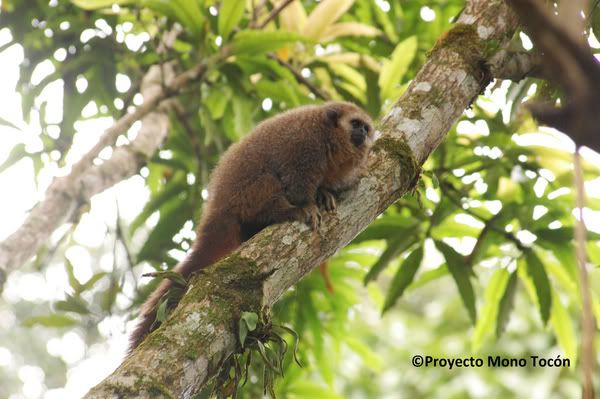
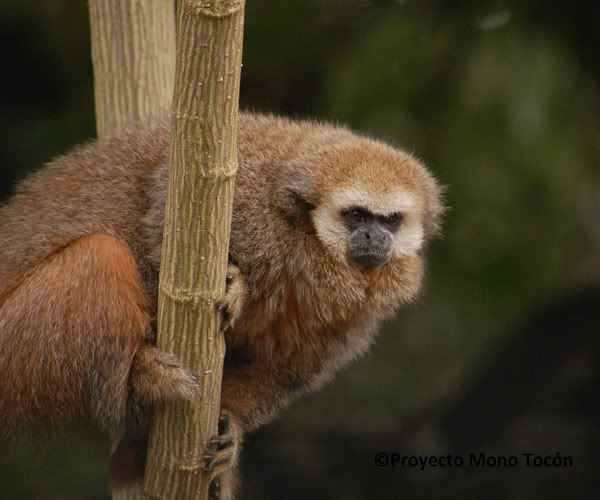 The Andean Titi monkey (Callicebus oenanthe) is so rare that it remained hidden in the tropical forests of Peru until 1990, when it was officially recognized as a valid species, according to the International Union for Conservation of Nature (IUCN).
The critically endangered Andean Titi monkey species has undergone a population reduction of more than 80 percent over the last 25 years due to the massive deforestation of its habitat. The deforestation is attributed to increased human population in its habitat area, as well as the intensification of local agricultural activities and a lack of concrete conservation efforts.
Previous research has shown that at least 60 percent of the Andean Titi monkey species' original habitat, located in the forests of Peru's Alto Mayo, has already been lost.
The Andean Titi monkey (Callicebus oenanthe) is so rare that it remained hidden in the tropical forests of Peru until 1990, when it was officially recognized as a valid species, according to the International Union for Conservation of Nature (IUCN).
The critically endangered Andean Titi monkey species has undergone a population reduction of more than 80 percent over the last 25 years due to the massive deforestation of its habitat. The deforestation is attributed to increased human population in its habitat area, as well as the intensification of local agricultural activities and a lack of concrete conservation efforts.
Previous research has shown that at least 60 percent of the Andean Titi monkey species' original habitat, located in the forests of Peru's Alto Mayo, has already been lost.
The Andean Titi monkey (Callicebus oenanthe) is so rare that it remained hidden in the tropical forests of Peru until 1990, when it was officially recognized as a valid species, according to the International Union for Conservation of Nature (IUCN).
The critically endangered Andean Titi monkey species has undergone a population reduction of more than 80 percent over the last 25 years due to the massive deforestation of its habitat. The deforestation is attributed to increased human population in its habitat area, as well as the intensification of local agricultural activities and a lack of concrete conservation efforts.
Previous research has shown that at least 60 percent of the Andean Titi monkey species' original habitat, located in the forests of Peru's Alto Mayo, has already been lost.Beautiful Brush Finch
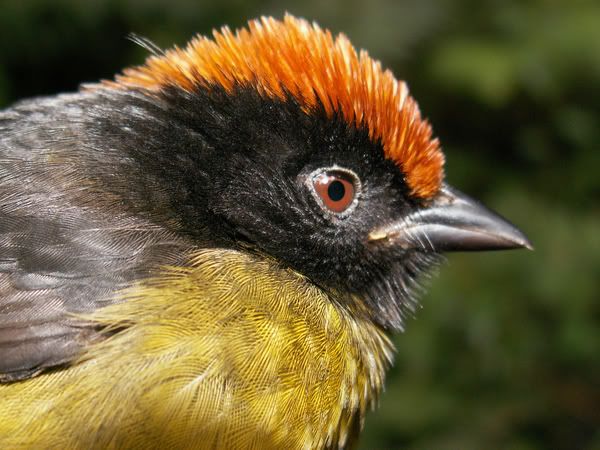 One of the bird species analyzed by study researchers, the Black-faced Brush-finch (Atlapetes melanolaemus) is endemic of Peru. Although its habitat range is decreasing, it has not yet reached the threshold to be considered vulnerable by IUCN standards.
Misty Forest
One of the bird species analyzed by study researchers, the Black-faced Brush-finch (Atlapetes melanolaemus) is endemic of Peru. Although its habitat range is decreasing, it has not yet reached the threshold to be considered vulnerable by IUCN standards.
Misty Forest
 Noel Kempff Mercado National Park is another ecosystem that was analyzed by the multinational team of researchers for the study. The national park is located in the Province of Jos Miguel de Velasco in Bolivia, on the border with Brazil.
The researchers mapped a wide range of ecosystems in Bolivia and Peru, including the wetlands of the Beni savanna, the dry Interandean valleys, and the cool, humid forests along the eastern Andean slope. The area is home to many endangered, endemic species and was declared a World Heritage Site by the United Nations Educational, Scientific and Cultural Organization in 2000.
The new study's researchers noted that a total of 226 species endemic to the Andes-Amazon basin of Peru and Bolivia have no national protection, while about half of the ecological systems have 10 percent or less of their range protected.
Noel Kempff Mercado National Park is another ecosystem that was analyzed by the multinational team of researchers for the study. The national park is located in the Province of Jos Miguel de Velasco in Bolivia, on the border with Brazil.
The researchers mapped a wide range of ecosystems in Bolivia and Peru, including the wetlands of the Beni savanna, the dry Interandean valleys, and the cool, humid forests along the eastern Andean slope. The area is home to many endangered, endemic species and was declared a World Heritage Site by the United Nations Educational, Scientific and Cultural Organization in 2000.
The new study's researchers noted that a total of 226 species endemic to the Andes-Amazon basin of Peru and Bolivia have no national protection, while about half of the ecological systems have 10 percent or less of their range protected.
One of the bird species analyzed by study researchers, the Black-faced Brush-finch (Atlapetes melanolaemus) is endemic of Peru. Although its habitat range is decreasing, it has not yet reached the threshold to be considered vulnerable by IUCN standards.
Misty Forest
Noel Kempff Mercado National Park is another ecosystem that was analyzed by the multinational team of researchers for the study. The national park is located in the Province of Jos Miguel de Velasco in Bolivia, on the border with Brazil.
The researchers mapped a wide range of ecosystems in Bolivia and Peru, including the wetlands of the Beni savanna, the dry Interandean valleys, and the cool, humid forests along the eastern Andean slope. The area is home to many endangered, endemic species and was declared a World Heritage Site by the United Nations Educational, Scientific and Cultural Organization in 2000.
The new study's researchers noted that a total of 226 species endemic to the Andes-Amazon basin of Peru and Bolivia have no national protection, while about half of the ecological systems have 10 percent or less of their range protected.
Elusive Owlet
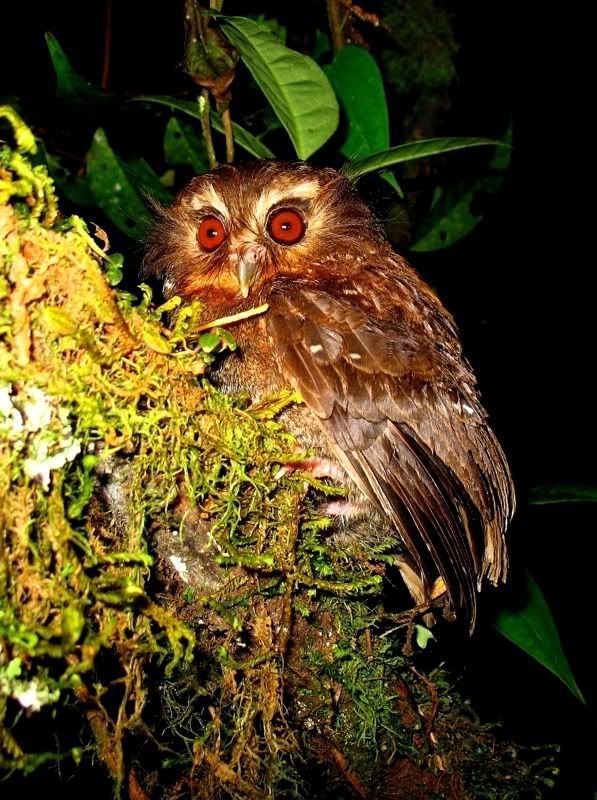 The Long Whiskered Owlet (Xenoglaux loweryi) is shown here at the Abra Patricia Reserve-Alto Nieva Private Conservation Area, located in the tropical forests of Abra Patricia in the Andes of Peru.
The species is endangered and its known range is extremely small, according to the IUCN. Very little is known about the Long Whiskered Owlet, and although it was first discovered in 1976, it wasn't until 2007 that the elusive species was observed in the wild for the first time.
The owlet's numbers are continuing to decline because its remaining areas of suitable habitat around Abra Patricia are being lost to deforestation as a result of land being cleared for timber and agricultural activities.
The Long Whiskered Owlet (Xenoglaux loweryi) is shown here at the Abra Patricia Reserve-Alto Nieva Private Conservation Area, located in the tropical forests of Abra Patricia in the Andes of Peru.
The species is endangered and its known range is extremely small, according to the IUCN. Very little is known about the Long Whiskered Owlet, and although it was first discovered in 1976, it wasn't until 2007 that the elusive species was observed in the wild for the first time.
The owlet's numbers are continuing to decline because its remaining areas of suitable habitat around Abra Patricia are being lost to deforestation as a result of land being cleared for timber and agricultural activities.
The Long Whiskered Owlet (Xenoglaux loweryi) is shown here at the Abra Patricia Reserve-Alto Nieva Private Conservation Area, located in the tropical forests of Abra Patricia in the Andes of Peru.
The species is endangered and its known range is extremely small, according to the IUCN. Very little is known about the Long Whiskered Owlet, and although it was first discovered in 1976, it wasn't until 2007 that the elusive species was observed in the wild for the first time.
The owlet's numbers are continuing to decline because its remaining areas of suitable habitat around Abra Patricia are being lost to deforestation as a result of land being cleared for timber and agricultural activities.
The Mishana Tyrannulet
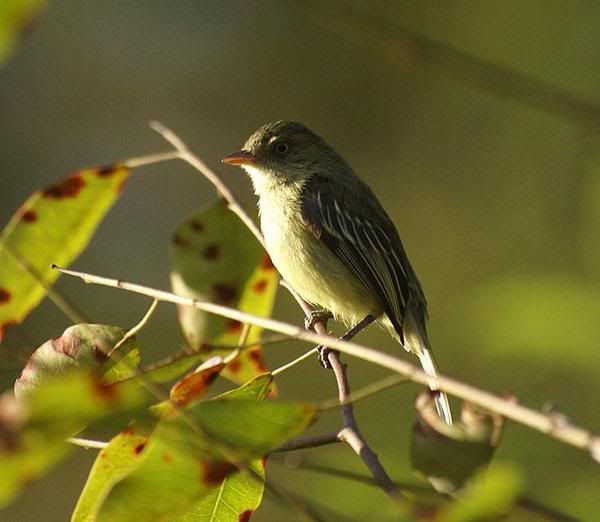 The Mishana Tyrannulet (Zimmerius villarejoi) is another bird species that is endemic of Peru. The vulnerable species' population is declining as a result of habitat loss due to continued timber extraction for building materials.
Although most of the species' known range is within a protected area, the few areas where the species is known to live on the upper Rio Nanay in Peru are completely unprotected.
White-tuffted Subneam
The Mishana Tyrannulet (Zimmerius villarejoi) is another bird species that is endemic of Peru. The vulnerable species' population is declining as a result of habitat loss due to continued timber extraction for building materials.
Although most of the species' known range is within a protected area, the few areas where the species is known to live on the upper Rio Nanay in Peru are completely unprotected.
White-tuffted Subneam
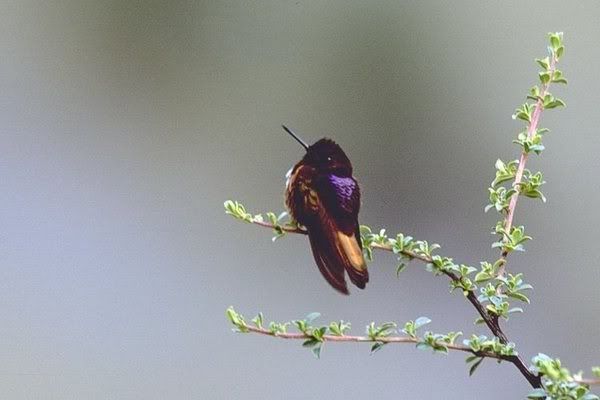 The colorful White-tufted Sunbeam (Aglaeactis castelnaudii) hummingbird is another one of the least protected species, according to the researchers. It lives within a restricted range in Peru, and its population is decreasing, according to the IUCN.
The Mishana Tyrannulet (Zimmerius villarejoi) is another bird species that is endemic of Peru. The vulnerable species' population is declining as a result of habitat loss due to continued timber extraction for building materials.
Although most of the species' known range is within a protected area, the few areas where the species is known to live on the upper Rio Nanay in Peru are completely unprotected.
White-tuffted Subneam
The colorful White-tufted Sunbeam (Aglaeactis castelnaudii) hummingbird is another one of the least protected species, according to the researchers. It lives within a restricted range in Peru, and its population is decreasing, according to the IUCN. 
